She Passed the Exam. Why Couldn’t She Solve the Problem?

Imagine Ananya, a final-year engineering student in Pune. The night before her exam, she draws a feedback loop so many times that she could almost do it with her eyes closed. She gets the question. She draws the diagram. She passes.
Six months later, at her first job, a supervisor shows her a water tank whose pump keeps switching on and off. “Where would you start looking?” he asks. Ananya remembers that there was a diagram. She can even picture its position on the page. What she can’t do, yet, is look at the tank and recognise the problem the diagram could help her solve.
Why do we sometimes see this gap in students graduating from Indian colleges? The India Employment Report 2024 describes a mismatch between education, skills and available jobs, alongside problems such as insufficient suitable employment. Ananya’s fictional story brings one part of that picture into focus. What happens between encountering an idea in college and being able to use it somewhere else? Could the way we load students’ minds have something to do with it? [1]
What is the student’s mind busy doing?
Ask a beginner to diagnose that pump fault. She has to make sense of the diagram, remember what the sensor does, follow the wiring and decide which clue to investigate. An experienced technician can recognise several of those details as one familiar pattern. The tank is the same. The mental work is different.
This is the starting point of cognitive load theory, developed by John Sweller and colleagues. Working memory has limited capacity for handling unfamiliar information at once. Long-term memory holds organised knowledge, or schemas, that let us treat several connected pieces as a meaningful whole. When too many unfamiliar pieces compete for attention, a learner may still complete the exercise by following cues or copying an example, while having little room to work out why the steps fit together. [2, 3]
| What demands mental effort? | What it looks like in Ananya’s course |
|---|---|
| Intrinsic load comes from the interacting elements of the material relative to what the learner already knows. | Understanding how the sensor, controller and pump affect one another is initially demanding. Teach what each component does before asking students to diagnose the whole system. |
| Extraneous load comes from how the material or activity is presented. | Flipping between a diagram on one slide, its key in a handout and an unexplained acronym in the question uses attention that could go into the diagnosis. Put the labels where students need them. |
| Learning-relevant effort, often called germane processing, goes into making sense of the material. | Asking why a steady sensor reading changes the diagnosis makes students connect evidence to a principle. Later formulations of the theory treat this as resources used to deal with intrinsic load. |
Ananya may have known enough to reproduce the diagram on exam day. Weeks later, can she reconstruct the principle from memory? And when the question arrives disguised as a noisy pump, can she tell that the principle applies? Those are three different outcomes: immediate performance, retention and transfer. Retrieving an idea from memory can improve delayed retention compared with rereading it. Applying it calls for practice recognising when it matters, including in situations that look different on the surface. [3, 4]
Give students time to open the problem, then ask them to close it
J. P. Guilford’s work on thinking abilities distinguished between generating possibilities and arriving at a suitable answer. Divergent thinking opens the search. Convergent thinking narrows it using evidence or criteria. A designer can switch between the two several times when new information makes an earlier choice look less promising. [5, 6]
Try a college problem that everyone recognises. The library is too noisy for individual work, but project teams still need somewhere to talk.
| Thinking move | What students could do | What an instructor can look for |
|---|---|---|
| Diverge | Imagine acoustic dividers, bookable discussion corners, quieter furniture layouts or a hybrid of two ideas. | Do the options differ in substance? Did students draw on observations about how the library is used? |
| Converge | Compare options for cost, accessibility, noise reduction and ease of supervision. Choose one and explain the trade-off. | Can students connect their choice to the criteria and say what would make them reconsider it? |
| Reopen and test | Discover that a proposed divider obstructs a wheelchair route. Revise the design, then try it on a different floor. | Can students use feedback to improve the solution and adapt their reasoning to a new setting? |

What happens when we watch the eyes?
In a 2026 exploratory study, Rachel Kimball and Rohan Prabhu gave 24 engineering undergraduates at Lafayette College in the US a version of that challenge. After a verbal-fluency screen, students had ten minutes to generate ideas for collaborative study spaces with fewer distractions. They then had up to two minutes to pick their best idea using four criteria: collaboration, distraction reduction, originality and practicality. Calibrated Tobii Pro Glasses 3 recorded eye data at 50 Hz in a consistently lit room. [6]
A saccade is a quick shift of gaze. The researchers divided the recorded count by elapsed seconds. A fixation is a period when gaze stays relatively stable. They grouped consecutive fixation samples and averaged the durations. They also used factor analysis to combine left and right pupil readings into a unitless pupil signal, then calculated its maximum, range and standard deviation for each student and task. They explored relationships using Spearman correlations and compared tasks and groups using two-way ANOVAs. Across both groups and tasks, more frequent saccades tended to accompany shorter fixations. [6]
Eye tracking gives us objective recordings of gaze and pupil changes. Inferring mental effort from them takes a further step. Pupils can dilate during mental effort, and brightness, viewing distance and arousal also affect their size. A long fixation could reflect concentrated processing, or simply what the student was looking at. I would pair eye tracking with a brief effort rating and a scored task. To study learning, I’d also come back later and see what the student remembers and can use. [6, 7]
| Published measure | What changed during selection compared with idea generation? |
|---|---|
| Saccades per second | More frequent, p < .001 |
| Average fixation duration | Shorter, p < .001 |
| Maximum pupil signal | No statistically significant task difference, p = .35 |
| Pupil range | Smaller, p < .001 |
| Pupil standard deviation | Larger, p < .001 |
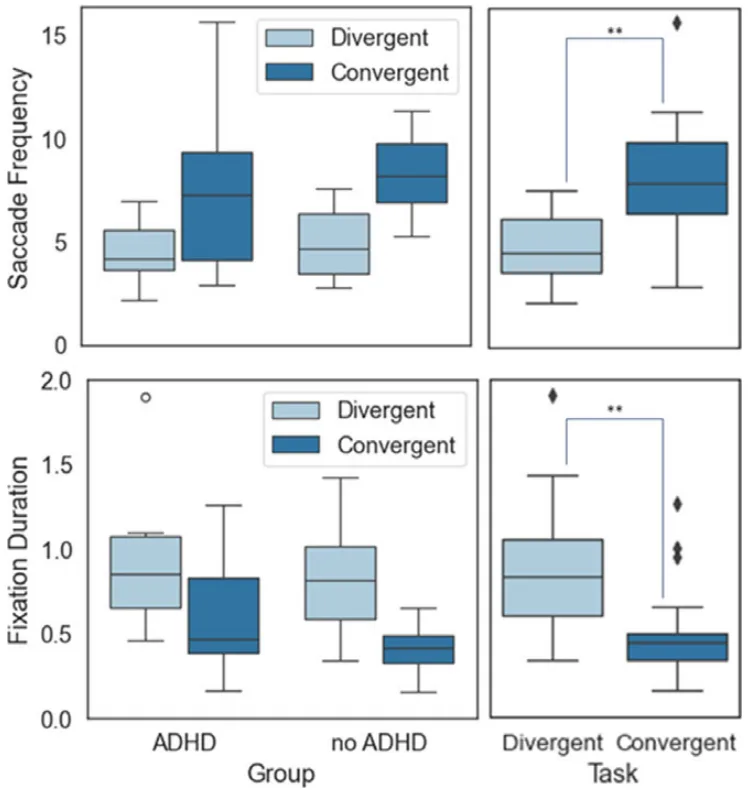
Figure 1. Published gaze results. Kimball & Prabhu (2026), Figure 6, cropped to the plot, CC BY 4.0.
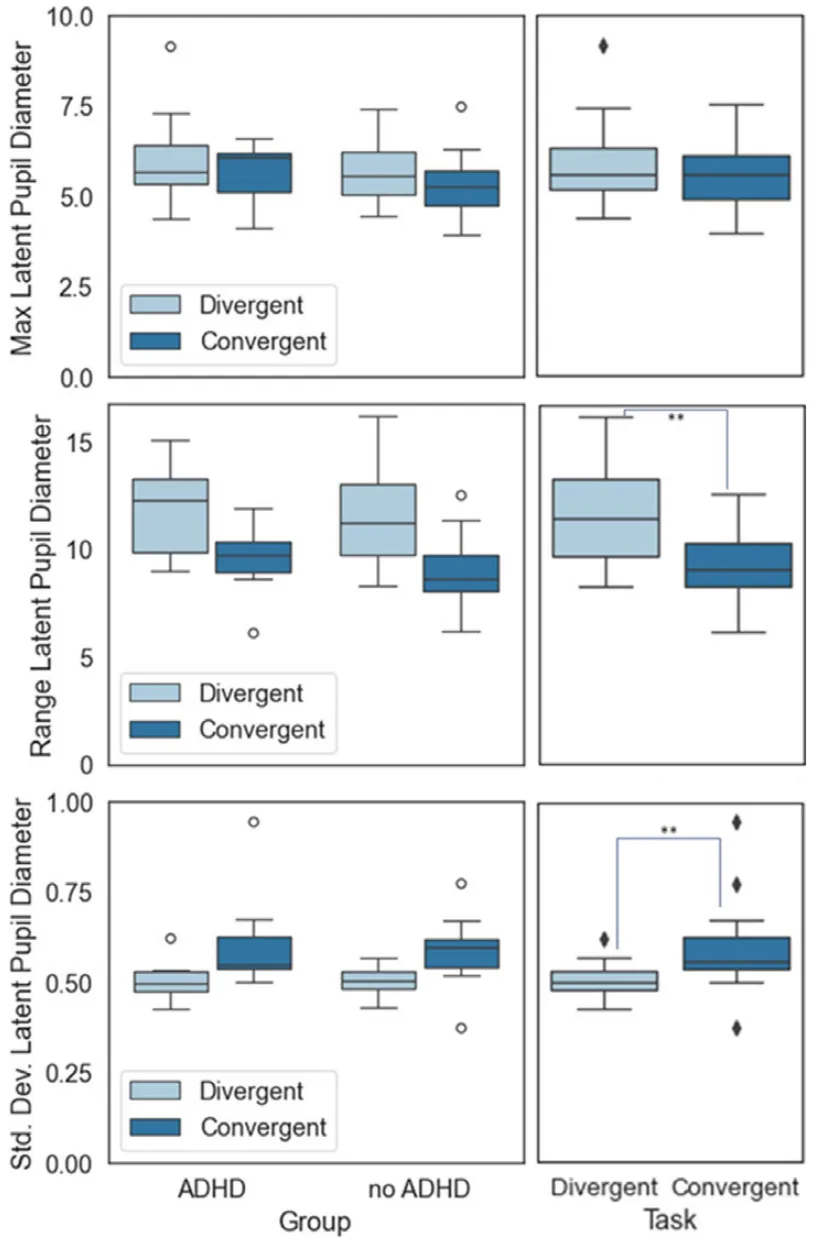
Figure 2. Published pupil results. Kimball & Prabhu (2026), Figure 7, cropped to the plot, CC BY 4.0.
How can the pupil signal have a wider range and a smaller standard deviation? Imagine a mostly quiet room with two sudden loud bangs. Its extremes could span a greater distance than those of a room where voices rise and fall throughout, even though the second room spends more time away from its usual level. Range captures the extremes. Standard deviation captures spread across the observations.
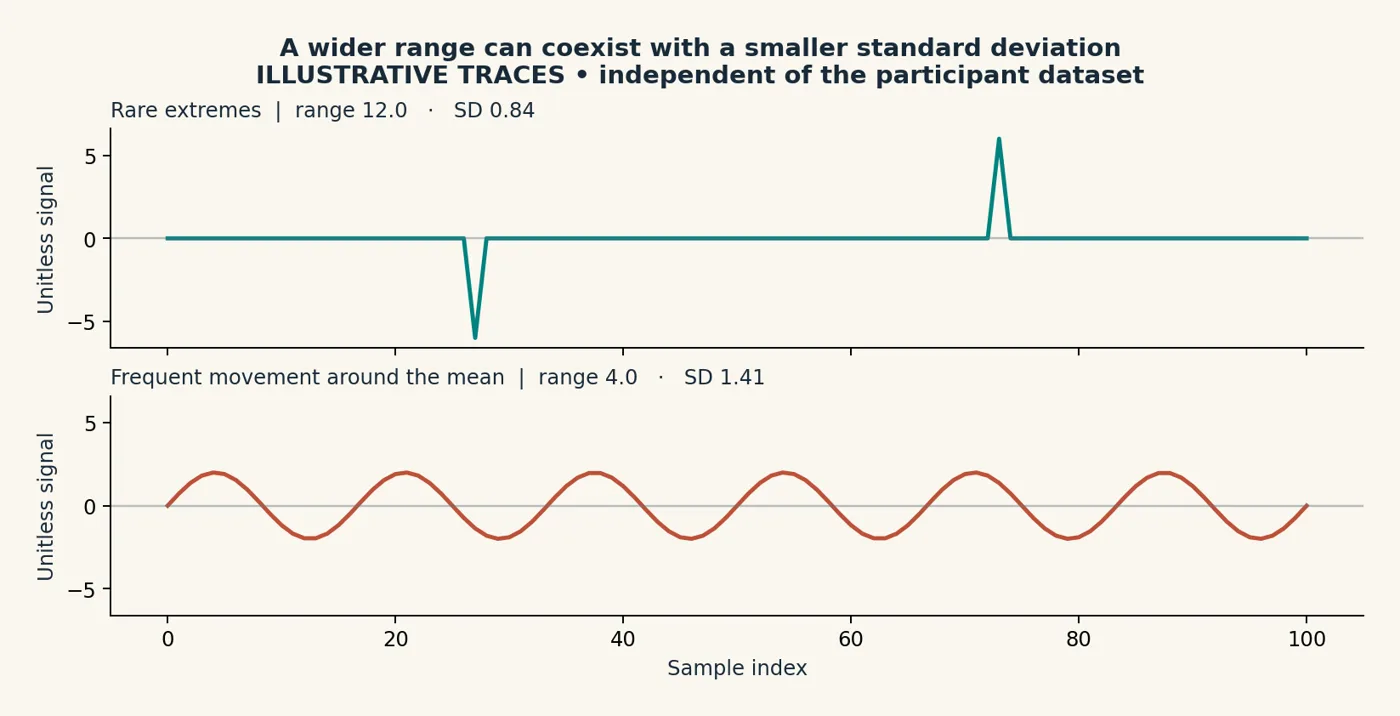
Figure 3. An illustration of range and standard deviation. The traces are invented to explain the statistics.
The researchers interpreted some gaze patterns as consistent with greater sustained attention or cognitive demand during idea generation. The pupil measures told a more complex story. Idea generation involved writing and lasted longer, giving extremes more time to occur. Selection involved reading and always came second. Those differences could influence the signals independently of thinking mode. The study also found no statistically significant differences by ADHD diagnosis or diagnosis-by-task interaction in this small sample. It did not track long-term learning or graduate performance. [6]
Could we design a different semester?
Cognitive load could contribute to the skills gap when course design consumes the attention students need to make sense of ideas. It’s one plausible piece of a bigger picture that includes what exams reward, how often students practise applying knowledge, access to internships and feedback, and which jobs are available. The eye-tracking results give us a reason to pay closer attention to what different tasks ask of students. A classroom study would need to test whether changing those demands improves what students can do weeks later. [1, 3, 6]
As an L&D practitioner with a doctorate in the field and a co-founder of Talmond Consulting Services, I would start with one module. Have the instructor think aloud through a worked diagnosis. Put the circuit and its labels on the same page. Then give students a similar fault with fewer hints and ask them to suggest several causes before ruling any out. Give feedback on their reasoning. Bring the principle back in a short retrieval exercise a week later. Finally, change the context: can they diagnose a greenhouse fan that keeps switching off? Score whether they retrieve the relevant principle, choose a sensible first test and explain their reasoning. I’d want to see that evidence alongside the exam marks.
Some students already make that leap. Who are they, and how did they learn to cope? Did they arrive with stronger foundations, fix equipment on an internship, learn from a friend, or quietly invent better ways to study? Which missing elements could a college supply to everyone? Where should we reduce unnecessary load, and where should we give students more time for demanding thinking? What would we have to change in teaching, assessment or industry partnerships to find out?
If you work in learning and development, I’d like to hear from you. Share an observation in the comments. What have you seen in corporate onboarding, apprenticeships or performance support that could improve college teaching? Send Talmond a redesign of one module or an entire curriculum. Show us what students would practise, what would change in how they learn, and how you’d tell whether the skills lasted. Our team will review the submissions. If your proposal would benefit from a wider discussion, we may invite you to present and discuss it in a webinar, podcast or panel for possible publication on our website or YouTube channel.
References
- International Labour Organization & Institute for Human Development. (2024). India Employment Report 2024: Youth employment, education and skills.
- Sweller, J. (1988). Cognitive load during problem solving: Effects on learning. Cognitive Science, 12, 257–285.
- Sweller, J., van Merriënboer, J. J. G., & Paas, F. (2019). Cognitive architecture and instructional design: 20 years later. Educational Psychology Review, 31, 261–292.
- Roediger, H. L., III, & Karpicke, J. D. (2006). Test-enhanced learning: Taking memory tests improves long-term retention. Psychological Science, 17, 249–255.
- Guilford, J. P. (1956). The structure of intellect. Psychological Bulletin, 53, 267–293.
- Kimball, R., & Prabhu, R. (2026). Looking around: Comparing eye-tracking metrics among designers with and without ADHD during convergent and divergent thinking tasks. Design Science.
- Mathôt, S. (2018). Pupillometry: Psychology, physiology, and function. Journal of Cognition, 1(1), 16.
Ready to revise smarter?
Revisor turns your own notes into guided quizzes, simple explanations and tagged revision.